 833-294-8583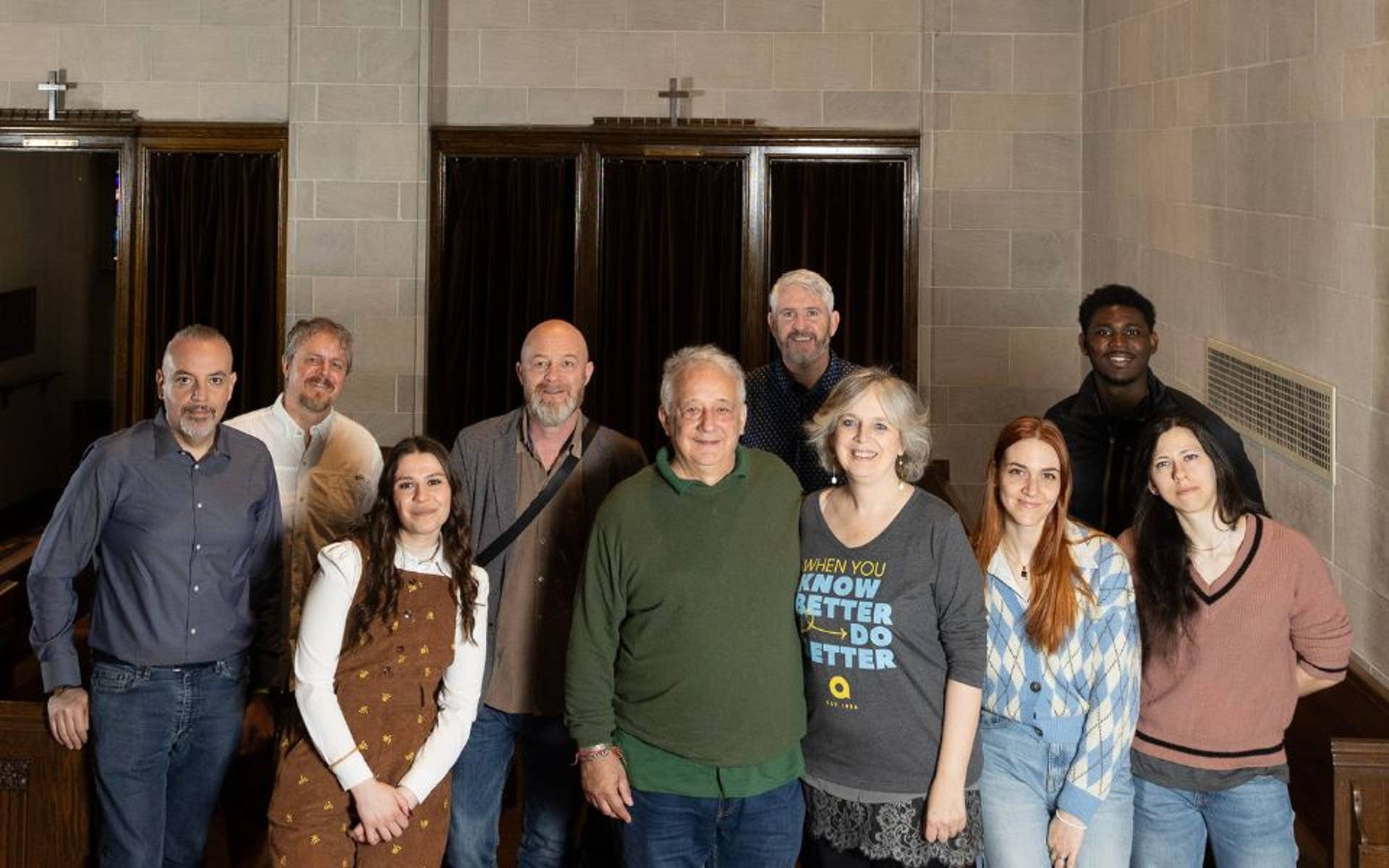
On March 21, Boys Town had the honor of welcoming a delegation of child welfare leaders from Italy for a visit that felt less like a professional exchange and more like a full circle moment of shared mission, history, faith and unexpected grace.
The group represented the Coordinamento Nazionale Comunità per Minori (CNCM), a national organization that supports nearly 150 residential communities serving vulnerable children and families throughout Italy. Their visit followed participation in the 70th Annual Conference of the Association of Children’s Residential and Community Services in Chicago, after which they made the journey to Omaha for a full day at Boys Town.
Among the delegation were CNCM President Giovanni Fulvi, Vice President Paolo Carli, Secretary Emmanuel Olivier, and Board Member Vittoria Vitaloni, joined by cultural mediators and Italian “care leavers,” young adults who had spent part of their childhood in residential care.
A Connection Rooted in History and Belief
The connection between CNCM and Boys Town began at the 2025 ACRC Conference in Boston, where CNCM leaders met Dr. Patrick Tyler, Senior Director of the Child and Family Translational Research Center at Boys Town National Research Hospital, and Jon Jelley, Vice President of Youth Care Operations.
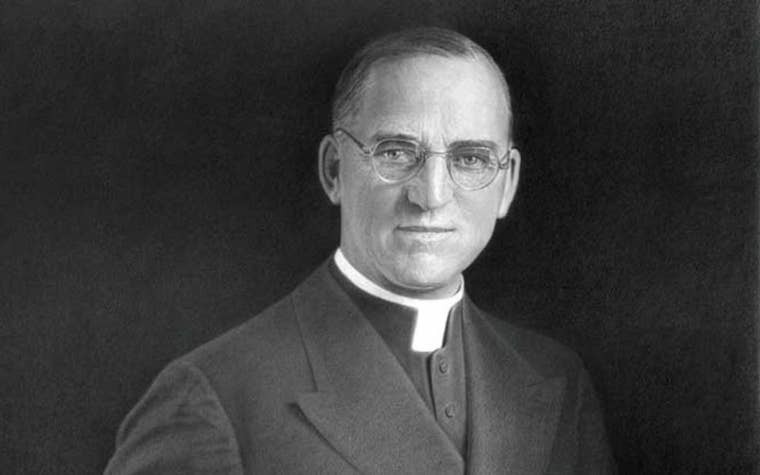
In conversation, they discovered a profound shared influence: the spiritual and philosophical bond between Boys Town founder Servant of God Father Edward J. Flanagan and Saint Giovanni Bosco (St. John Bosco), the Italian priest who devoted his life to at‑risk youth in the 19th century.
Both men believed deeply in the dignity and potential of every child. Both shaped care models grounded in love, structure and respect. And both rejected the idea that any child could be written off as “bad,” a belief that still anchors Boys Town’s mission today.
For CNCM board member Vittoria Vitaloni, the connection was especially meaningful. Her program in Turin is located beside the Basilica of Our Lady Help of Christians, the resting place of St. John Bosco, himself.
Italy’s “Boys Town”: A Living Legacy
In the years following World War II, Father Flanagan’s ideas had crossed the Atlantic in a powerful and concrete way. Italy’s first “city of boys,” and one of the country’s earliest models of family‑style residential care, was the Repubblica dei Ragazzi, the “Boys Republic.”
Founded in 1945 in Civitavecchia, Italy, Repubblica dei Ragazzi emerged in the immediate aftermath of the war, when thousands of children were orphaned, displaced, or abandoned. Its founder, Monsignor John Patrick Carroll Abbing (1912–2001), was an Irish Catholic priest serving in Italy who witnessed firsthand the devastation facing young people in post‑war Europe.
After studying and adapting Father Flanagan’s Boys Town model, Monsignor Carroll Abbing established what became, in essence, Italy’s first “Boys Town.” He applied the same core principles -- trust, responsibility, dignity and love -- in a time marked by trauma and rebuilding.
The success of Repubblica dei Ragazzi made it a model replicated across Italy in the decades that followed and contributed to the broader international spread of Boys Town‑inspired communities throughout Europe and Latin America. For the CNCM delegation, this history is not distant, it is foundational to their work today.
Moments of Grace at Dowd Chapel
When the Italian delegation arrived at Boys Town, their first stop was Dowd Chapel, where Father Jeff Mollner, National Director of Mission and Spirituality, welcomed them. What followed was a moment of quiet and unexpected reciprocity.
Ms. Vitaloni presented the Boys Town team with medals of St. John Bosco that had been blessed at his tomb in Turin. In return, Scott Hartman of Boys Town offered a rosary he had commissioned, one bearing the image of St. John Bosco on one side and Father Flanagan on the other. As it turned out, he had not known at the time who would receive it. Father Mollner blessed the rosary and presented it to Ms. Vitaloni.
Inside the chapel, the delegation paused before the stained‑glass window honoring St. John Bosco and then gathered at Father Flanagan’s tomb to pray the Rosary in Italian. Their prayers lifted up CNCM, Boys Town, and children and families around the world -- a powerful reminder that compassion transcends language and geography.
Discovering Shared History
The group continued to the Hall of History, where volunteer guide Henry Monsky shared the story of Boys Town’s founding. Monsky is the grandson of Henry Monsky, the Jewish businessman who famously loaned Father Flanagan $90 to start a home for boys, an early testament to the Village’s commitment to serving children of all races, religions and backgrounds.
The visitors were especially moved by the story of the Two Brothers statue and its enduring message: “He ain’t heavy, Father, he’s my brother.”
That sense of providence deepened in the Boys Town archives, where the Italian guests discovered correspondence between Boys Town and child‑care programs in Italy written shortly after World War II. Among the collection were letters penned by Father Flanagan himself. One letter -- randomly selected by Ms. Vitaloni -- advocated for a young graduate seeking employment. As she translated it into Italian, the group realized it was written on behalf of one of the boys who had inspired the Two Brothers statue.
The coincidence felt anything but accidental.
Life in a Boys Town Family Home
Later in the day, the delegation visited the home of Colby and Rochelle Jacobs, who care for eight Boys Town girls alongside their three biological children. Though tired after celebrating prom the night before, the girls eagerly welcomed the guests and gave a tour of their home, translated into Italian in real time.
The Italian care leavers instinctively viewed the experience through a protective lens shaped by their own journeys in care, but what they saw moved them deeply. They praised the warmth, structure and dignity present in the home. The girls, in turn, were delighted by their visitors and quickly began making plans to visit Italy someday.
Fellowship Beyond Campus
After touring campus and exploring Omaha, the delegation joined Boys Town staff for dinner at a local steakhouse. There, while watching the dramatic conclusion of Nebraska’s NCAA tournament game, they struck up a spontaneous conversation with nearby patrons. The group spoke warmly about Father Flanagan and their visit to his tomb.
One woman listening nearby described the tomb as “a place of comfort and peace,” recalling the warmth that rises from the chapel vents beneath the benches as visitors sit and reflect.
So engaged were they in conversation about Father Flanagan that the delegation didn’t realize Nebraska had won the game until afterward. Laughing, they celebrated belatedly with an enthusiastic “Go Big Red!” before making a quick stop for Husker gear.
A Providential Ending
The delegation departed Omaha the next morning under a radiant sunrise. The following day, while waiting at the Chicago airport, the group received news at the same time as Boys Town leadership: Pope Leo XIV had declared Father Edward J. Flanagan “Venerable,” officially recognizing his heroic virtue and advancing his cause for sainthood. The next steps -- beatification and canonization -- will each require a verified miracle.
What might have seemed like a string of coincidences felt instead like quiet grace at work.
Father Flanagan, inspired by St. John Bosco, went on to inspire generations through love, courage and unshakable trust in God’s providence. Father Flanagain’s words still resonate today: “The work will continue, you see, whether I am there or not, because it is God’s work, not mine.”