 833-294-8583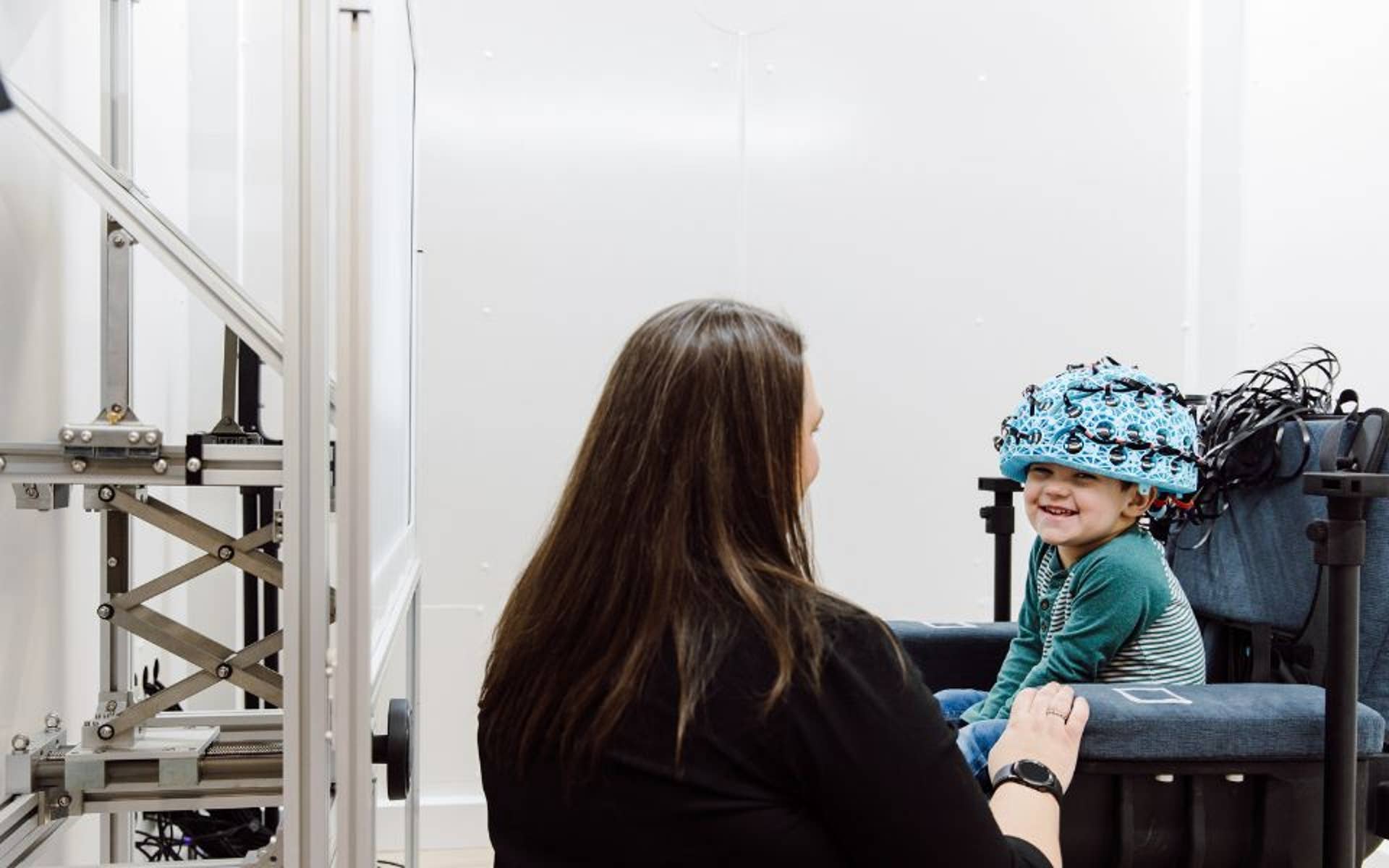
Every discovery at Boys Town is sparked by a question. Why is a condition occurring? Can care be improved? Is it possible to understand more? Over the last year, simple questions drove bold, practical research projects designed to improve the lives of children and families everywhere.
Read on for research snapshots from last year that showcase how Boys Town researchers are advancing solutions that matter today while opening doors to tomorrow’s innovations.
Using AI to Improve Hearing-Aid Fitting for Children
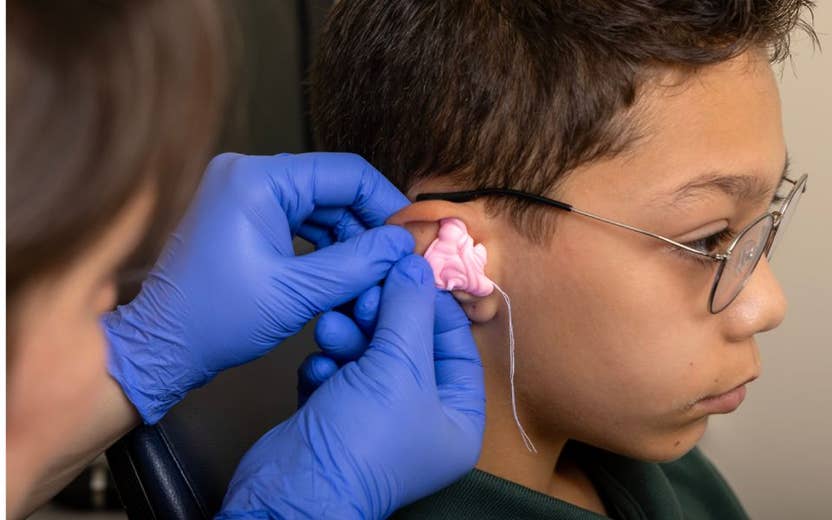
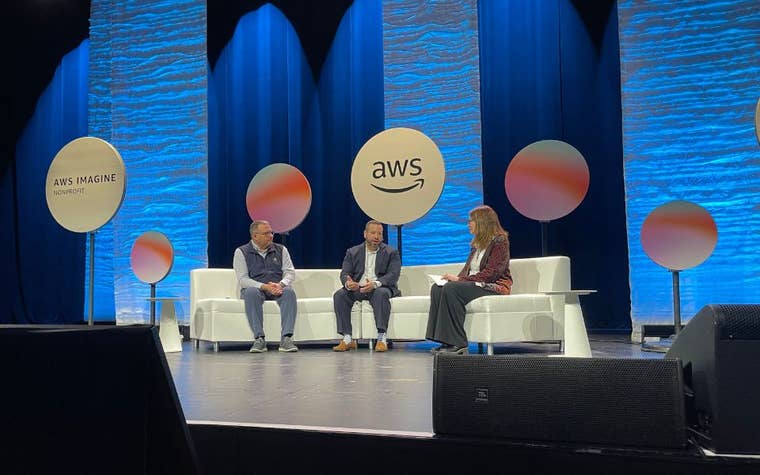
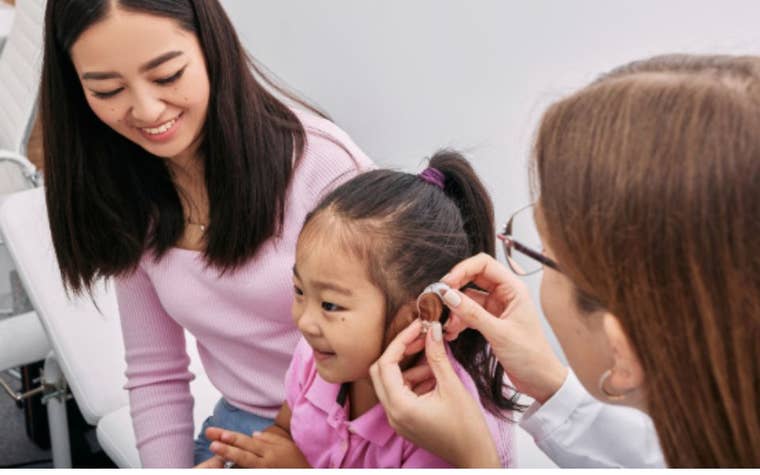
You might not realize how fast kids’ ears grow — until they need hearing aids. What if technology could help reduce the number of in-person hearing-aid fittings kids need each year? Boys Town’s innovative work to improve the hearing-aid fitting process received a boost after winning the 2025 Amazon Web Services (AWS) Imagine Grant. This grant for nonprofits using cloud technology will support Boys Town’s efforts to predict ear canal growth through a machine learning model.
Generative AI with 3D printing technology will help make it possible to create custom hearing-aid earmolds with fewer in-person ear impressions, which can be uncomfortable for children. Custom molds are critical because a poor fit can cause feedback or whistling and reduce hearing access. Read more about how the grant will help Boys Town improve the hearing aid-fitting process for families.
Understanding Early Hearing Loss in People with Down Syndrome
Are young people with Down syndrome experiencing age-related hearing loss decades earlier than those who are neurotypical? Dr. Heather Porter, a clinical audiologist and scientist in the Center for Hearing Research, is finding that many people with Down syndrome have hearing patterns in their teens and 20s that are more typically seen in adults in the general population around age 60. This information helps to inform clinical care protocols and directly benefits young people with Down syndrome and their families.
Our hearing research for people with Down syndrome at Boys Town has recruited more than 200 study participants — far more than previous studies — for research to improve hearing and balance outcomes in people with Down syndrome over a wide age range. Boys Town now has three separate grants and more than $5 million in external funding. In 2026, Dr. Porter’s team will also explore why people with Down syndrome and hearing loss are much less likely to receive hearing aids or other interventions than those who are neurotypical with similar hearing profiles.
Studying Parental Trauma’s Link to Children’s Language Development
Could a parent’s childhood adversity influence their child’s communication outcomes more strongly than the child’s own experiences? We know that the way a parent talks to their child can contribute to how children learn to listen and talk. We also know that experiencing adversity during early childhood can triple a child’s risk for language problems.
Boys Town researcher Dr. Claire Selin designed a study to test whether a parent’s history of childhood adversity may predict the child’s communication to a greater extent than the child’s own history of adversity. The argument was so compelling, Dr. Selin’s proposal to examine the impact of intergenerational trauma on communication outcomes in children was funded on the first submission. Studying this question may lead to ways to help identify at‑risk families earlier, so intervention can begin before communication problems emerge.
Measuring Long-Term Impact of Inpatient Psychiatric Care
How does specialized inpatient psychiatric care help in the long term? While we know that this type of care is important and even lifesaving, more data is needed about long-term effects beyond previously gathered benchmarks like readmission rates.
Dr. Patrick Tyler, Senior Director of the Child and Family Translational Research Center, and his team are gathering data on specific mental health indicators — such as decreases in hopelessness and increases in social support. The project has clinicians and scientists working together to gain unique insights that might not be discovered without their collaboration.
How do puberty‑related changes in the brain, hormones and behavior contribute to anxiety and depression in autistic adolescents? It’s an important question, because adolescents with autism experience anxiety and depression at roughly twice the rate of their neurotypical peers. Yet, until recently, most autism research has focused on early childhood, with limited studies looking at puberty specifically.
At Boys Town, Dr. Giorgia Picci is one of few researchers studying puberty and neurodevelopment in autistic youth. Her study, dubbed PANDA for “Puberty and Neurodevelopment in Autism,” examines mental health, brain imaging and hormonal markers of puberty in adolescents with autism to better understand how pubertal changes shape brain development and well-being. This work is supported by a Young Investigator Grant from the Brain Behavior Research Foundation. These insights may help identify developmental risk factors for anxiety and depression in autistic teens and ultimately inform targeted intervention efforts.
Mapping the Infant Brain with State-of-the-Art Device
Infants can’t tell you what they’re thinking, but what if a new device could show how they think? Boys Town researchers are mapping the infant brain in ways never before possible, thanks to a state-of-the-art device called the OPM (optically pumped magnetometer). Boys Town was one of the first facilities in the world to install the system, which includes a wearable device that looks like a bike helmet. It shows researchers how the infant brain is working in real time by capturing the brain’s magnetic signals.
The progress our researchers have made with this device represents truly one-of-its-kind work that will allow us to do brain mapping in infants with epilepsy and other neurodevelopmental conditions — groundbreaking work that may lead to better understanding of the brain and these conditions.
Using Artificial Intelligence to Solve Real-World Problems
While the potential of AI often makes headlines, can it solve real-world problems? Across Boys Town’s research labs, AI is being used to solve practical human challenges, such as:
- Supporting early language development. An AI powered tool is being developed which could ease a parent’s worry about a child’s speech development. It will allow a parent to load a smartphone recording of the child talking into a program that will analyze the child’s speech. It can then recommend whether the parent should talk to their pediatrician about their child’s language development.
- Building stronger social skills. Data from the Social Skills Assessment taken by Boys Town youth is being used to develop adaptive training modules which address their specific needs. The AI tool will help us target and strengthen the foundational skills used by the Boys Town model, such as communication, problem‑solving, collaboration and empathy, by adapting modules to the youths’ individual needs.
These studies scratch the surface of what’s happening in the 40+ research labs at Boys Town. Here, collaboration fuels our mission and drives innovations across behavioral health, hearing and balance, speech and language, and neuroscience fields. Every study moves us closer to better outcomes for children and families in Omaha and around the world.