

 833-294-8583
How Boys Town Empowers Youth and Strengthens Families
This content was originally published as an official series by the Global Health Council.
Boys Town: Where second chances begin.
Boys Town operates on the belief that strong families build strong children and that every child deserves the chance to grow up in a safe, loving and supportive environment. Founded in 1917 by Father Edward J. Flanagan in Omaha, Nebraska, Boys Town began as a refuge for homeless boys. It quickly evolved into a thriving village rooted in compassion, dignity and the conviction that every child deserves a second chance. This foundational idea sparked a global movement that continues to expand today.
Currently impacting over 3.5 million people each year, Boys Town offers a wide range of research-based services tailored to meet families where they are. These services include in-home support and parenting classes aiming to empower families to stay together, build resilience and thrive.
Boys Town works within schools, homes and communities to help children develop social skills, healthy coping strategies and emotional regulation. Its Family Home Program offers youths who come from troubled backgrounds a nurturing environment led by trained Family-Teachers. The national hotline has responded to over 10.5 million calls, providing immediate support to those in crisis.
A commitment to research-driven solutions sets Boys Town apart. The Boys Town National Research Hospital is internationally recognized for its pioneering work in childhood deafness, developmental language disorders and communication challenges. The organization's neuroscience initiative leads regional efforts in epilepsy and neurological care and conducts ground-breaking OPM-MEG research on childhood behavioral and mental health issues.
The Child and Family Translational Research Center at Boys Town develops and evaluates interventions that address the real-world challenges faced by families today, including trauma, substance misuse and educational and emotional struggles.
Boys Town also support the adults closest to children—parents, teachers and caregivers. When these individuals are equipped with the right tools, children thrive. For instance, school districts implementing the Boys Town Education Model have reported significant improvements in student behavior and attendance, demonstrating the lasting impact of positive relationships and practical skills.
Persistence is the organization's secret. Boys Town refuses to give up on children, even when others have or when the children themselves have lost hope. Boys Town looks beyond anger, defiance and pain to understand causes and then help children heal.
"Boys Town is a miracle. They are truly saving lives.”
About 15% of children globally suffer from emotional or behavioral problems linked directly to unstable or unsupportive family environments. A child's mind is shaped long before the first school bell rings, and it all starts at home. Family isn't just important. It's the foundation of brain development, learning, and emotional strength. Boys Town's approach, developed in the United States, now inspires and empowers organizations worldwide, reaching communities across Japan, Spain, and Colombia with lasting impact. Every child deserves the opportunity to grow up in a safe and loving environment, regardless of their background or circumstance. Enabling families to provide effective care is just as essential as proper nutrition.
At Boys Town, this philosophy is at the heart of everything we do. Every family faces challenges, but some families' problems threaten their very existence. Be it poverty, parental stress, drugs and alcohol addiction, domestic abuse or adolescent defiance, and behavioral challenges, Boys Town works closely with families in crisis, empowering them to overcome struggles and rebuild their lives. Boys Town began in 1917, providing care for homeless boys of all races, creeds, and nationalities. At the time, having all races, nationalities, and religions live, work, play, and study together was a dangerous idea in America. And so was the idea of changing a child's circumstances and environment, rather than simply turning to incarceration. That in and of itself was influential, and despite criticism and objection, the idea spread.
By 1938, Boys Town's remarkable approach resulted in a movie about Father Flanagan that spread these ideas globally. After World War II, Father Flanagan helped set up systems of care in Japan and Germany. In fact, by 1959, there were more than 80 Boys Town-like places created throughout the globe by those who studied the Boys Town model. They knew there was a better way to care for kids. Even today, our research-backed programs are replicated nationally and internationally. The story of Boys Town is proof positive that one person's vision can change the world. Two organizations from Spain and one from Colombia, inspired by the work of Boys Town in the United States, were welcomed to the inaugural Boys Towns of the World Congress.
The three-day virtual event, titled Boys Towns of the World, More Than 100 Years of Stories of Life, was celebrated as a reflection of over a century of impact and shared experiences. It is envisioned that the global gathering will be expanded each year, with organizations from Australia, South Africa, and Ireland expected to be included in the future, continuing the growth of this extraordinary international community. With our behavioral health and wellness services, we offer specialized programs to support mental health, emotional regulation, and healthy development for children and families, connecting them with care and resources they need to thrive. We run community programs in schools and neighborhoods to help kids and teens build social skills, handle anger, avoid drugs, and make healthier choices. With our in-home family services, counselors work with families at home to improve parenting, relationships, and child behavior, preventing abuse, neglect, or delinquency. So I'll read one page and then you read the other one, okay?
Okay, I'll go first and sit on my side. When Ryan is seven years old, just turned seven, he's amazing and he's smart. He loves math. He didn't get that from me. And he loves being silly. He did start kindergarten last school year. When he's around other children, he gets too excited.
He doesn't want to sit down. He doesn't want to listen. He wants to play. You know, he was just being a kid, but I think those things were becoming an issue on a daily basis. I was constantly repeating myself. I was constantly having headaches. I was frustrated a lot.
So I knew I needed to change because what I was doing wasn't working. Through Boys Town, they have improved my life and my parenting skills and my son's behavioral overall. In the six years that we've worked with Boys Town, our behavior referrals have decreased by 60%. And so I think that alone demonstrates that through decreased behavior referrals in Infinite Campus, this is working and it's showing success. Our chronic absenteeism has also decreased from 43% to 25%. So that also shows that more students are coming to school as a result of positive interactions with adults as well as positive interactions with other students. All of those strategies and skills that we've taught students to speak up for themselves in a positive, kind way are a result of utilizing Boys Town strategies.
A key principle of our model is taking care of those closest to the kids. And so this means that we support adults that are in the environment with the children. So whether that be the parents in the home, the teachers in the school, our staff that are working with our kids in our residential programs. And providing that family environment allows the children to get their needs met. Research is really at the foundation of what we do here at Boys Town. And that goes all the way back to Father Flanagan, who as he started to learn from the boys, referred to Boys Town as an experimental station and use work where the adults could learn from the kids how to best address the complex issues that they were facing in society. And so as we fast forward to today, we're very fortunate in that not only do we have an array of services, but we have an array of research with state-of-the-art technology to be able to address the complex problems that we're facing today in society.
That ranges from neuroscience to child and family studies to hearing research, speech and language research, cognitive development research. Regardless of if it's a service in a family setting or in a residential setting or in the school, our services are going to support those adults so that they can take best care of the kids to meet their needs.
People always ask, what's the secret? It's persistence. Love drives that persistence. It's not giving up, no matter how many times they resist your attempts to care for them. Because they don't trust it at first. They don't trust it at first, so that's why persistence is important. Our mission remains the same as it has for decades, to change the way America cares for children and families.
We envision an America where every child and family receives effective and compassionate care they need. Despite my behaviors, despite me being this angry child, I never had anyone look past anger and try to figure out why I was angry, what was causing me to be so angry. And I was just so used to people giving up on me and just kicking me out. They gave me a second chance. Boys Town is a miracle. They are truly saving lives.
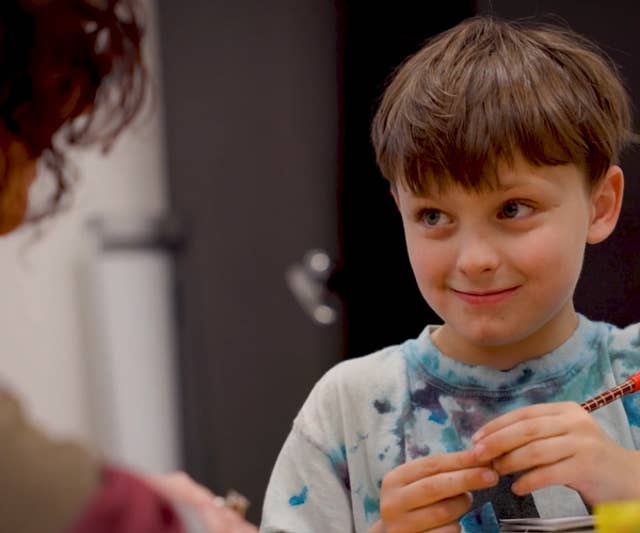
Make a Lasting Impact Today
A gift to Boys Town helps change a child's life by providing hope, stability, and the opportunity for a brighter future. Give today and help ensure a child receives the second chance they deserve. The impact of your support reaches not only the children and families we serve, but the communities they grow up in, making your contribution more important than ever.
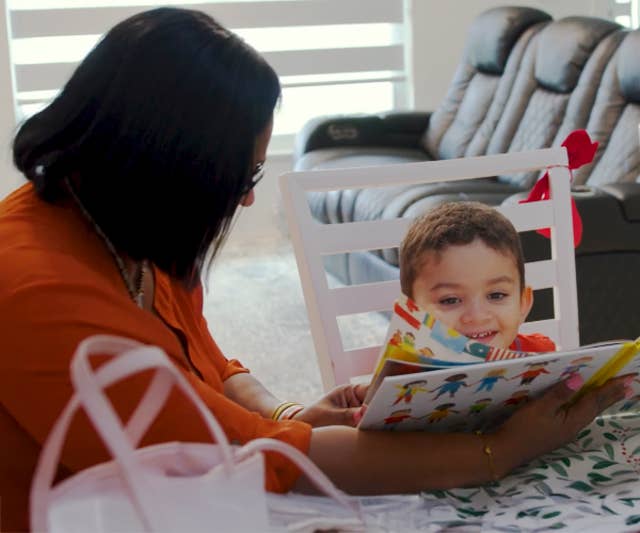
See How Lives Are Changed Every Day
Sign up for our eNewsletter to receive stories of hope and see how Boys Town has been transforming lives for over 100 years. Join a community that believes every child deserves a chance to thrive and get a front-row seat to the impact of our programs and services.